As an Amazon Associate, we earn from qualifying purchases. Some links on this site are affiliate links at no extra cost to you. Our recommendations are based on thorough research and editorial judgment.

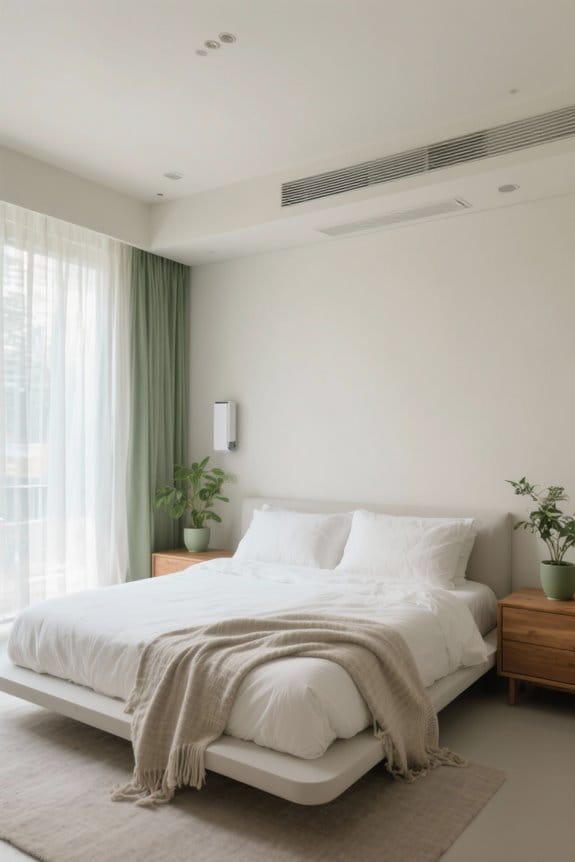
The Impact of Proper Ventilation on Sleep Quality

Proper ventilation plays an essential role in sleep quality, as demonstrated by research indicating that CO₂ levels above 800 ppm can disrupt restful sleep. Studies led by Ms. Mizuho Akimoto highlight that maintaining air quality through effective ventilation, such as mechanical systems or open windows, greatly enhances cognitive function and emotional well-being. Incorporating sustainable materials can further reduce harmful VOCs. Efficient design practices can transform living environments, fostering better sleep and health outcomes, with promising findings revealed in ongoing inquiries.
Key Takeaways
- Proper ventilation reduces CO₂ levels below 800 ppm, which is essential for maintaining optimal sleep quality and cognitive function.
- Elevated CO₂ levels, particularly over 1,000 ppm, can disrupt sleep and negatively affect daytime performance.
- Enhanced air quality through adequate ventilation significantly supports restorative sleep, improving overall health and emotional regulation.
- Implementing a ventilation rate of approximately 8 L/s per person is crucial for fostering healthier indoor environments.
- Regular monitoring of indoor air quality and incorporating air purifiers can enhance sleep quality by reducing airborne pollutants.
Importance of Sleep for Health
While it may seem easy to overlook, sleep plays a crucial role in maintaining overall health, as a well-rested mind and body facilitate essential cognitive functions and emotional regulation. Good sleep is linked to various health benefits, while poor sleep can result in serious conditions such as cardiovascular disease and Alzheimer’s. Environmental factors, particularly air quality and ventilation, greatly impact sleep. For instance, maintaining CO₂ concentration below 800 ppm is critical, as levels above 1,000 ppm can disturb sleep. Additionally, inadequate ventilation reduces sleep efficiency and subjective sleep quality, adversely affecting cognitive performance the next day. Therefore, ensuring ideal air quality and adequate ventilation is essential for enhancing sleep health, which in turn supports daily well-being and cognitive function. Furthermore, having eye protection features in your workspace can contribute to overall well-being by reducing strain during long working hours.
Study Overview and Objectives

Enhancing sleep quality is a priority that extends beyond personal habits, as environmental factors play a pivotal role. Led by Ms. Mizuho Akimoto from Waseda University and in collaboration with experts from the Technical University of Denmark and Shanghai Jiao Tong University, this study evaluated how ventilation rates and temperature affect sleep quality. Conducted with ten healthy young adults, the research tested two temperature conditions (24 °C and 28 °C) alongside two ventilation rates (800 ppm and 1700 ppm). Findings indicated that poor bedroom air quality, characterized by elevated CO₂ levels, negatively impacted subjective sleep quality and next-day performance. The study underscores the importance of ideal ventilation standards to enhance cognitive performance, ensuring that sleep quality is preserved amidst modern building designs. Additionally, achieving a serene environment can be further supported by using quiet space heaters, which help maintain comfortable temperatures without disruptive noise.
Key Findings on CO₂ Concentration

Understanding the impact of CO₂ concentration on sleep quality is essential for creating ideal bedroom environments, as research clearly shows that elevated levels of carbon dioxide can considerably disrupt restful sleep. Disturbed sleep occurs at CO₂ concentrations of 1,000 ppm, while optimal sleep quality is best achieved at levels below 800 ppm. Indoor air quality can be maintained by achieving a ventilation rate of approximately 8 L/s per person. However, current building codes may fall short of ensuring these recommended CO₂ levels, as the highest non-disruptive concentration is noted at 850 ppm. Therefore, enhancing ventilation not only promotes better air but ultimately leads to improved sleep quality, demonstrating the crucial role of intentional design in creating healthy indoor spaces. Additionally, installing an air purifier with low noise levels can significantly enhance the sleeping environment by reducing airborne pollutants.
Recommended Products


PERFECT FOR MULTIPLE ROOMS: Comes with multiple indoor air handlers for individual rooms and a single outdoor unit. Enjoy individual temperature controls in each room for ideal climate control.

The OS12500 is the most powerful portable ozone generator and is perfect for deodorizing and eliminating odors in extra- large spaces such as locker rooms, banquet halls, hotel suits, apartments, offices, restaurants, and commercial properties. It will eliminate even the most severe odors caused by tobacco, smoke, pets, water and flood damage and more
Implications for Building Standards
As the evidence surrounding the effects of indoor air quality on sleep becomes increasingly apparent, reevaluating building standards emerges as an essential necessity. Current building codes often permit inadequate ventilation, potentially compromising sleep quality and cognitive performance. Research suggests that maintaining CO₂ levels below 800 ppm in bedrooms is imperative; surprisingly, doubling the recommended ventilation rate may considerably improve outcomes. This highlights the need for updated air quality management protocols within residential design. Designers must balance health benefits with energy efficiency, considering materials and systems that promote enhanced airflow without sacrificing sustainability. By integrating these insights into building regulations, stakeholders can foster healthier living environments, ensuring that comfort and well-being are prioritized in future residential projects. Additionally, portable oil diffusers can enhance indoor air quality and contribute to better sleep by providing a soothing aroma while maintaining the necessary ventilation.
Recommended Products

COMPACT DESIGN, MAXIMUM EFFICIENCY - Space saving design without compromising on HyperHEPA filtration, capturing 99.5% of particles down to 0.003 microns. This room air purifier removes mold, pollen, dust, smoke, allergens, pet dander, asthma triggers, and even ultra-fine viruses and bacteria from the air. Perfect for spaces up to 1240 sq ft.

INDUSTRY-LEADING CLEANING POWER - iAdaptAir has one of the highest clean air delivery rates (CADR) on the market: Pro size boasts 706 CFM. Covers 5,474 sq. ft. in one hour or 1,059 sq. ft. with 5 air exchanges per hour.

CLEANER AIR IN MINUTES: PuroAir is proven to filter the pollutants lurking in your home’s air. This large room air purifier cleans rooms up to 2,000 sq ft in one hour.* Breathe clean, crisp air and kiss your allergies goodbye! (Based on independent testing in an ISO 17025 certified lab and typical residential room’s ventilation rates, 2025.)
Future Directions and Recommendations
To guarantee that future residential designs prioritize sleep quality, researchers and industry professionals must unite to explore innovative ventilation solutions. Aiming to maintain CO₂ levels below 800 ppm is essential, as studies suggest this threshold greatly enhances sleep quality and cognitive function. Proposed ventilation rates of at least 0.6 L/s per m² may demand adjustments beyond current Danish building regulations, indicating that outdated standards require revisiting. Additionally, ongoing investigations into how air quality is impacted by varying environmental factors, such as outdoor pollution, are imperative. Collaborations among researchers, the housing industry, and manufacturers will be necessary to develop new guidelines and strategies for enhanced ventilation practices. Ultimately, these concerted efforts could lead to improved overall health and well-being. Effective remote control organization can also contribute to a more restful environment by reducing distractions in the home.
Impact of Bedroom Air Quality on Sleep and Performance
Maintenance of ideal bedroom air quality serves as a linchpin in ensuring restful slumber and peak cognitive performance throughout the day. Poor air quality, particularly with elevated CO₂ levels above 1,000 ppm, can severely hamper sleep quality, leading to decreased cognitive function the following day. In contrast, effective ventilation strategies aim to maintain CO₂ concentrations below 800 ppm, thereby enhancing both sleep quality and performance. Studies indicate that increased airflow correlates with more alertness and better decision-making abilities. For example, employing mechanical ventilation systems or using open windows, though influenced by outdoor pollution, can greatly improve bedroom air quality. Ultimately, prioritizing these factors can foster an environment conducive to restorative sleep and superb daytime productivity. Additionally, incorporating portable HEPA filters in the bedroom can further enhance air purity and improve overall sleep conditions.
Recommended Products

Powerful 6-Stage Commercial Filtration System – Engineered for demanding environments, the PA100i-W combines a pre-filter, proprietary H13 HEPA filter, activated carbon filter, photocatalytic oxidation, UVC light, and a plasma generator to capture airborne particles as small as 0.3 microns—ideal for offices, warehouses, clinics, and other high-traffic commercial spaces.

This purifier is the most advanced and complete chemical and VOC filtration system on the market today.
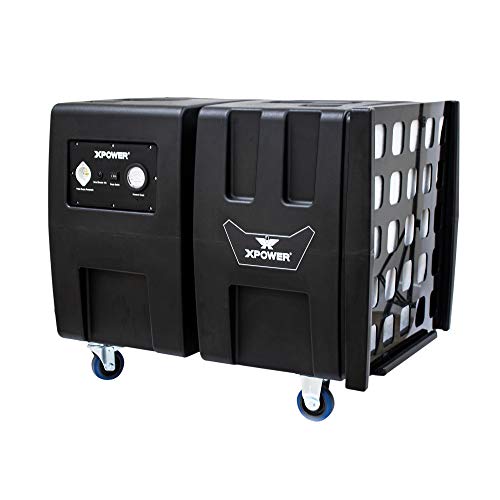
Efficiently re-mediate large spaces such as: hospitals, schools, arenas, gyms, conference halls, hotels, and any other largely occupied areas. 40.2 x 29 x 32.3 inches 112.4 pounds
Need for Increased Ventilation
Elevating the standard of indoor air quality hinges on the necessity for increased ventilation, particularly in residential spaces where sleep quality is paramount. Current Danish regulations suggest a minimum ventilation rate of only 0.3 L/s per m², which fails to reduce CO₂ levels to ideal standards. Research reveals that doubling this rate can keep CO₂ below 800 ppm, thereby fostering better cognitive performance post-sleep. Poor air quality, with CO₂ levels exceeding 1,000 ppm, disrupts sleep, leading to subpar next-day performance. Effective outdoor air supply is essential, as open windows enhance ventilation when pollution is low, while mechanical ventilation systems excel in polluted areas. Hence, maintaining CO₂ levels below 750 ppm positively correlates with enhanced sleep quality and cognitive function. Additionally, utilizing a smart oil diffuser can improve indoor air ambiance, contributing to relaxation and potentially better sleep.
Recommended Products

Space-Saving Corner Sauna Room - Fits Any Home Gym or Bedroom:This corner home sauna is engineered to utilize underused room corners. Its triangular design provides a spacious interior for 3-4 person relaxation while occupying minimal floor space, making it the ideal home sauna solution for apartments, master bathrooms, or compact home gyms.

Multi-Room Cooling Solution: Engineered to provide consistent cooling across every corner of your home, this 36,000 BTU 2-zone mini split air conditioner (7,000 BTU + 24,000 BTU) enables independent temperature regulation for customized comfort in each room. The outdoor unit’s built-in chassis heating function ensures reliable operation in extreme climates, with a robust temperature range of -13°F to 125°F.Refrigerant GWP: 675

Very Quiet and Maintenance Free - 15 Year Warranty
Recommendations for Air Quality Management
Although air quality might seem like an abstract concept, its direct impact on sleep quality and cognitive function makes it a vital factor in residential design. To manage air quality effectively, it is essential to maintain CO2 levels below 800 ppm in bedrooms, greatly enhancing sleep and alertness. While natural ventilation via open windows is ideal in low outdoor air pollution conditions, mechanical ventilation becomes important in areas with high pollution. Recent studies advocate for increasing ventilation rates to a minimum of 0.6 L/s per m². In addition, air quality management should include regular assessment of pollution levels, utilizing air purifiers when necessary, ensuring a healthier sleeping environment conducive to restorative rest and cognitive function. Notably, sustainable material options in bedroom furniture can also improve overall air quality, leading to better sleep outcomes.
Recommended Products

Maximum coverage: AirDoctor 5500i is the perfect air purifier for large rooms and open concept spaces. Circulates the air in 1043 sq. ft. 4x/hour or 2086 sq. ft 2x/hour. CARB EO G-23-243 & FCC ID 2AC7Z-ESPS3WROOM1

Advanced HyperHEPA Filtration: Designed to remove and trap 99.995% of all airborne particles down to 0.003 microns, the Atem X supplies unequaled protection against dust, pollen, pet dander, smoke from wildfires, and more. True HEPA filtration

COMPLETE HOME STARTER BUNDLE - Breathe cleaner air in every room with the iAdaptAir Home Air Purifier Starter Bundle. Includes 1 Small, 1 Medium, and 1 Large purifier, delivering powerful, multi-room air purification for living rooms, kitchens, bedrooms, and other shared spaces in your home. Perfect for families, allergy sufferers, and anyone looking to improve indoor air quality.
Frequently Asked Questions
How Does Ventilation Affect Sleep?
Ventilation considerably influences sleep by regulating airflow dynamics, maintaining ideal oxygen levels, controlling humidity, and ensuring temperature stability. Additionally, it aids in reducing noise and managing carbon dioxide concentrations, all contributing to sleep quality improvement.
What Are the 5 Benefits of Good Ventilation?
Good ventilation dances through a space, offering air circulation benefits, body temperature regulation, humidity control, and enhanced indoor air quality. This nurtures respiratory health and fuels productivity improvement, creating an environment where one can truly thrive.
What Impacts Sleep Quality the Most?
The sleeping environment greatly influences sleep quality, with essential factors including temperature control, light exposure, noise levels, mattress quality, and established sleep routines, all playing pivotal roles in achieving restorative rest and overall well-being.
What Happens When You Sleep in a Poorly Ventilated Room?
Sleeping in a poorly ventilated room can trigger sleep apnea, worsen respiratory issues, and lead to elevated temperature and humidity levels. Additionally, compromised air quality and increased noise pollution negatively affect overall sleep quality and health.