As an Amazon Associate, we earn from qualifying purchases. Some links on this site are affiliate links at no extra cost to you. Our recommendations are based on thorough research and editorial judgment.


Understanding Chandelier Crystal Types and Light Refraction

Chandelier crystals, essential for aesthetic and functional brilliance, come in various types such as Swarovski, K9, and Venetian, each influencing light refraction. According to experts, Swarovski crystals, with over 30% lead, showcase exceptional clarity, while K9 offers affordable luxury with vivid reflections. The science of refraction means these crystals act as prisms, enhancing the chandelier’s light effects. Designers like Baccarat utilize specific shapes to amplify this interaction, making each chandelier a compelling work of art. Explore further to uncover the nuances of their impact.
Key Takeaways
- Different types of crystals, like Swarovski, K9, and Venetian, significantly affect the clarity and brilliance of chandeliers.
- Light refraction in crystals creates stunning visual effects by bending light, acting as tiny prisms to maximize illumination.
- The refractive index of crystal ranges from 1.5 to 1.6, enhancing brilliance and generating enchanting rainbow effects.
- Regular maintenance, including gentle cleaning and inspection for loose crystals, ensures optimal light refraction and chandelier longevity.
- Choosing the right light bulbs, such as incandescent or LED, complements the crystal type and enhances the overall lighting ambiance.
The Importance of Crystal in Chandeliers
Crystals serve as the heart of chandeliers, embodying both aesthetic appeal and functional brilliance. The type of crystal used greatly affects brilliance through light refraction and clarity. For instance, Swarovski crystals, with over 30% lead, offer unmatched clarity and dazzling effects. In contrast, K9 crystal provides an affordable luxury, being 15% lighter yet still enchanting with bright reflections. Venetian crystal boasts unique shimmer and artisan quality due to its traditional molding techniques, while handcut crystals, though they may show wheel marks, exude timeless elegance and distinctive light transmission. Strategic arrangements of these crystals in multi-tiered chandeliers greatly enhance overall brightness and visual appeal, making the selection of crystals essential in chandelier design. Additionally, different crystals can enhance ambiance by creating unique lighting effects and shadow play throughout the space.
Recommended Products

Designed and manufactured in the U.S.A. with a durable stainless steel frame, aluminum candle slips and crystal bobeches. Dressed with a waterfall of aluminum leafs and crystal beading around fine glass arms.

Designed and manufactured in the U.S.A. with a glass frame and crystal bobeches. Dressed with crystal beads, pendeloques, drops, pears, and a crystal ball finial in 3 crystal trim options: Heritage Handcut, Radiance, or Swarovski crystals.

Included canopy measures as 6. 25 inch diameter and included downrod measurements are: (1) 3", (1) 6", (1) 12 inch, (2) 18 inch
Types of Crystal Used in Chandeliers
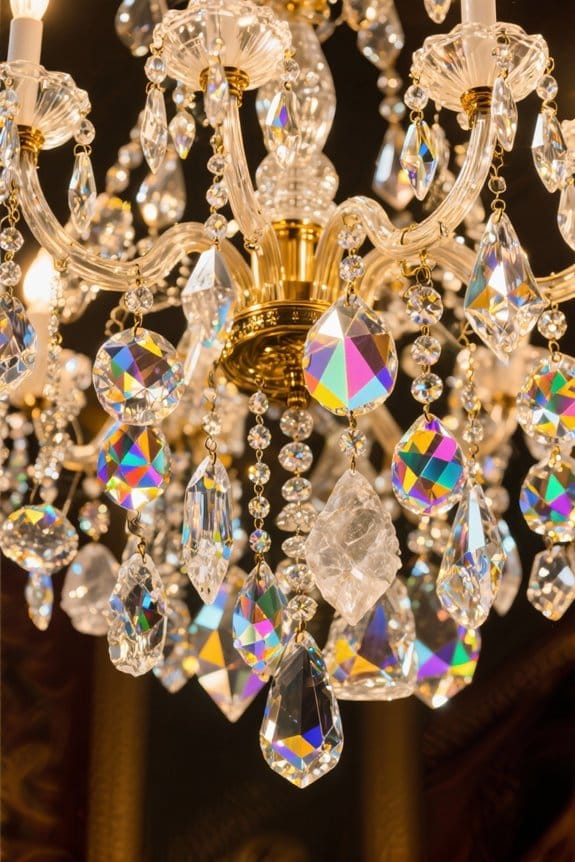
When considering the diverse types of crystal utilized in chandeliers, the variations considerably influence both visual impact and overall design. K9 crystal, renowned for its durability and exceptional high refractive index, is an affordable option that sparkles brilliantly. In contrast, Swarovski crystals, with over 30% lead content, are celebrated for their dazzling brilliance and meticulous craftsmanship. Venetian crystal from Murano offers a unique shimmer, elegantly molded and fire-polished to enhance beauty at accessible prices. Handcut crystals from Turkey provide intricate designs, appealing to those seeking timeless aesthetics, while Gemcut crystals, known for their clarity, require regular cleaning to maintain their sparkle. Each type of crystal contributes distinct characteristics, shaping the overall chandelier design and enhancing light refraction dynamics in elegant ways. Additionally, selecting chandeliers with adjustable LED lighting can further enhance the effect of these crystals in a space.
The Science of Light Refraction
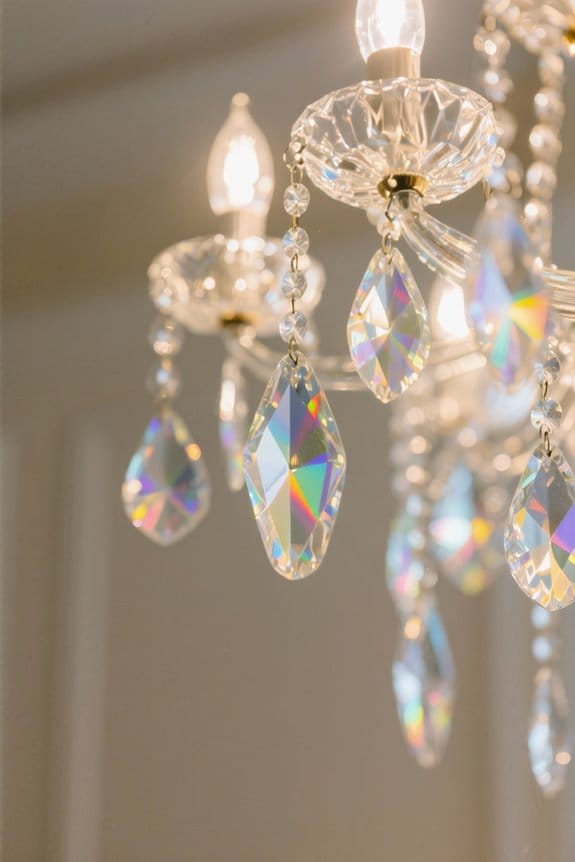
Light refraction is a fascinating phenomenon that plays a pivotal role in the enchanting world of chandeliers. As light travels through different media like crystals, it bends and changes speed, creating mesmerizing effects. Crystals, with their higher index of refraction compared to glass, enhance the brilliance of chandeliers by acting as tiny prisms. These crystals’ multiple facets maximize light interaction, leading to stunning dispersion and vibrant visual displays. Designers meticulously consider these principles; renowned brands such as Baccarat and Swarovski expertly cut their crystals to amplify refraction’s effects. This keen understanding of light refraction not only captivates the eye but also considerably influences chandelier design, offering endless possibilities for creating striking decorative pieces. The use of stain-resistant materials in other home decor items showcases the importance of durability and easy maintenance, much like the careful selection of crystal types in chandeliers.
Understanding the Index of Refraction
Understanding how light interacts with different materials reveals the complexity behind the beauty of chandeliers. The index of refraction quantifies how much light slows down as it passes through various materials; for crystal, it ranges from 1.5 to 1.6. This elevated index greatly enhances the brilliance and sparkle of a crystal chandelier compared to alternatives like glass. As light refracts through the prisms of crystal types, enchanting rainbow effects emerge, elevating the visual appeal. Different refractive indices allow designers, such as those at Swarovski and Baccarat, to tailor lighting effects artfully. Therefore, selecting the right crystal type becomes essential in achieving not only stunning aesthetics but also unique, immersive experiences graced by exquisite play of light. The energy-efficient LED lights used in fairy lights can similarly create mesmerizing lighting effects when strategically placed within a crystal chandelier.
How Crystal Quality Affects Brilliance
Brilliance in chandelier design is not merely about aesthetics; it hinges on the quality of crystals used, which greatly dictates the visual impact of these enchanting fixtures. High lead oxide content, particularly in full lead crystals containing over 30% lead, enhances brilliance due to increased density and superior light bending capabilities. Crystals like Swarovski, renowned for their meticulous craftsmanship and substantial lead content, maximize light reflection, creating unrivaled sparkle. In contrast, K9 crystal, although affordable and visually appealing, possesses a lower refractive index, resulting in diminished brilliance. Additionally, the clarity and craftsmanship of crystals, such as Turkish and Gemcut varieties, considerably influence light refraction, enhancing lighting effects and overall impact in chandelier applications, ultimately shaping design excellence. Understanding the common materials used in lighting fixtures can further enhance one’s appreciation of how different crystals contribute to brilliance.
Recommended Products

Wood Wagon Wheel Chandelier: The farmhouse wooden chandelier is full of allure; it comes with a matt black high-quality metal canopy and 12*bulbs base, fully lighting up your house with a retro atmosphere and comfortable feeling.
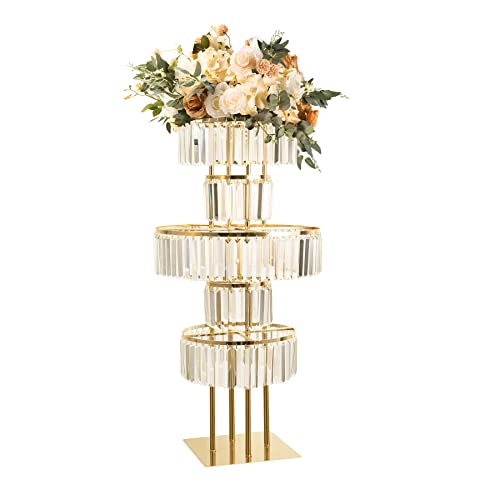
PACKAGE AND SIZE: 1 large crystal flower stand (the flowers in the picture are not included), with a height of 120cm/47.24” and a bottom diameter of 30cm/11.81", fully meeting your height needs. Due to the difference of light and screen, the real gold may be slightly different from the picture, but the real thing will make your eyes shine.

【Made to Last – Sturdy and Durable】Crafted from high-quality iron and acrylic crystal with an exquisite electroplating process, this flower stand is scratch-resistant, impact-resistant, and resistant to corrosion and deformation. It's built for a long service life, even with repeated use at events and in your home.
The Role of Crystal Shape in Light Dispersion
Crystals in chandeliers are meticulously designed not only for beauty but also for their ability to manipulate light through various shapes. The impact of crystal shape on light dispersion is profound; complex cuts create multiple facets that refract light in diverse directions, enhancing visual effects. Octagon-shaped crystals, with their eight sides, capture and reflect light intensely, resulting in brilliant sparkles. Conversely, icicle-shaped crystals direct light more sharply, producing striking visuals reminiscent of nature. Additionally, the arrangement of different shapes amplifies brightness and color dispersion, leveraging each shape’s refractive qualities. Colored crystals, in particular, offer rich, distinctive light effects compared to clear varieties, adding depth and interest to the luminous display within the chandelier. The interplay of realistic design features in chandelier components further enhances their light-manipulating capabilities.
Light Bulb Types and Their Impact on Crystal Display
Even though selecting the right light bulb may seem like a minor detail, it considerably influences the overall impact of a chandelier’s design, particularly in the way crystals interact with light. Incandescent bulbs, known for their warm light, accentuate the golden hues in crystal chandeliers, creating a cozy ambiance. Conversely, LED bulbs produce cooler light, offering a sparkling effect that enhances the brilliance of high-quality crystals. The choice of bulb wattage plays a significant role in light intensity, as inappropriate wattage can result in glare or dullness, compromising visual appeal. Ultimately, the type of light bulb selected not only affects color temperature and refraction but also amplifies the luxurious feel of the space, making it feel inviting and elegant. Additionally, using energy-efficient LED technology can significantly reduce electricity costs over time while providing long-lasting illumination.
Maintenance Tips for Crystal Chandeliers
How can one guarantee that a crystal chandelier remains an enduring centerpiece in their home? Regular maintenance is important, beginning with dusting the gemcut crystals with a soft, dry cloth to uphold their excellent shine and shimmer. To deep clean, a mild solution of water and vinegar can be used once or twice a year, while avoiding abrasive cleaners that may scratch their high reflective surfaces. During cleaning, it’s essential to turn off the lights and let the bulbs cool to prevent burns. Additionally, one should inspect the chandelier frequently for loose crystals or structural issues, as crystals are known to require attention to maintain stability and safety, forming a crucial part of effective maintenance tips for these elegant fixtures. Incorporating regular inspections of fixtures ensures that the chandelier remains safe and beautiful for years to come.
Enhancing Your Interior With Crystal Chandeliers
Crystal chandeliers are more than just lighting fixtures; they are exquisite examples of decorative art that can dramatically enhance the aesthetic of any interior space. Designed to refract light, these chandeliers create mesmerizing prismatic effects that enhance ambiance, making a room feel more inviting. Different crystal types, such as Swarovski, Egyptian, and Venetian, offer varying brilliance and clarity, driving visual impact. A thoughtful arrangement and multiple tiers increase surface area, optimizing light refraction for a stunning effect. Light bulb selection, whether incandescent or LED, also affects the color temperature and intensity. To maintain their enchanting sparkle, regular maintenance and cleaning are essential, ensuring that these beautiful pieces continue to shine brightly in any setting. Additionally, ventilation features can play a crucial role in keeping the surrounding environment fresh and conducive to enjoying these magnificent lighting fixtures.
Recommended Products
Designed and manufactured in the U.S.A. with a durable stainless steel frame, aluminum candle slips and crystal bobeches. Dressed with a waterfall of aluminum leafs and crystal beading around fine glass arms.

Traditional Crystal collection features a versatile traditional design.

Materials: Metal (iron), crystal
Frequently Asked Questions
What Type of Crystal Is Used in Chandeliers?
Chandeliers commonly utilize Swarovski crystals, lead crystals, and cut crystals for their remarkable reflective qualities and clarity. Vintage chandeliers often incorporate glass crystals, while modern designs favor faceted crystals, enhancing both aesthetics and chandelier maintenance.
What Is the Difference Between K5 and K9 Crystals?
What distinguishes K5 from K9 crystals? K5 exhibits lower clarity and durability compared to K9, which boasts superior optical performance and design versatility. Price differences arise mainly from manufacturing processes and maintenance requirements, impacting overall refraction quality.
How to Choose the Right Crystal Chandelier?
Choosing the right crystal chandelier involves evaluating chandelier size, installation height, and color scheme. Crystal clarity and light reflection should match room style, while budget considerations and energy efficiency guide decisions alongside maintenance tips and design trends.
How Do I Identify My Crystal Chandelier?
To identify a crystal chandelier, one must explore its styles, sizes, and historical significance while considering cleaning techniques and light effects. Observing color variations and sourcing methods reveals the decorative enhancements that define its unique allure.