As an Amazon Associate, we earn from qualifying purchases. Some links on this site are affiliate links at no extra cost to you. Our recommendations are based on thorough research and editorial judgment.


Understanding Pendant Light Cord Length Adjustments

Adjusting pendant light cord lengths is essential for enhancing both functionality and aesthetics. Proper placement guarantees ideal light distribution while blending harmoniously with surrounding elements. Most pendants, like those from brands such as West Elm or Wayfair, feature adjustable cords, allowing versatility in height. Simple tools like screwdrivers and measuring tape facilitate modifications. For instance, a pendant should hang 30-36 inches above a kitchen island to reduce glare. Exploring the perfect techniques can further elevate your design space.
Key Takeaways
- Adjusting pendant light cord length enhances functionality and visual appeal, ensuring appropriate lighting without glare over surfaces like kitchen islands.
- Most pendant lights are adjustable; corded options allow for tucking excess length, while chain pendants require tools for link removal.
- For optimal hanging height, position pendants 12-20 inches below an 8-foot ceiling and 30-36 inches above countertops or dining tables.
- Always prioritize safety by turning off power before adjustments and securely connecting wires for proper insulation and protection against electric shock.
- Utilize measuring tape and temporary strings to visualize ideal placements and ensure uniform height for aesthetic and functional balance in your space.
Why Adjust Pendant Light Cord Length?
While it may seem trivial, the adjustment of pendant light cord lengths plays a crucial role in enhancing both functionality and aesthetics within a space. Achieving the right pendant light height, especially over kitchen islands, is essential to guarantee the light shines appropriately without causing glare. Designers, like Jonathan Adler, emphasize the importance of attention to detail in these adjustments. Customizing cord lengths not only establishes visual harmony with surrounding furnishings, but also accommodates varying ceiling heights—12 to 20 inches below an 8-foot ceiling is generally recommended. This careful placement enhances a room’s design integrity while providing ideal illumination, proving that small adjustments can lead to significant improvements in both usability and visual appeal. Additionally, adjustable pendant lights offer customizable lighting effects, ensuring that your space maintains both style and functionality.
Are All Pendant Lights Adjustable?

The adaptability of pendant lights makes them a favored choice among homeowners and designers alike when it comes to creating customized lighting solutions. Most pendant light cords are designed to be adjustable, enabling users to modify height based on personal preferences and room aesthetics. Corded options, typically the simplest to adjust, often feature mechanisms that efficiently tuck away excess cord, ensuring a clean look. While rod-based adjustable pendants provide some height flexibility with modular rods, they lack the extensive adjustments possible with corded designs. Chain pendants allow for adjustments by removing links, though this process requires tools. Finally, swag pendants can exhibit versatile hanging options, with the ability to adjust the length by altering cord slack to achieve the perfect balance in lighting. Additionally, understanding adjustable heights in various chandelier designs can further enhance your lighting strategy.
Recommended Products

Longree chandelier using 100% hand blown murano glass in a beautiful colour with light transmission anti-scratch and heat dissipation, long lifetime. giving you crystal clear and fresh art feel.

MODERN DESIGN – This ET2 Lighting pendant delivers a refined, contemporary look that elevates any room in your home with timeless design appeal.

MODERN DESIGN – This ET2 Lighting pendant delivers a refined, contemporary look that elevates any room in your home with timeless design appeal.
Tools and Materials Needed
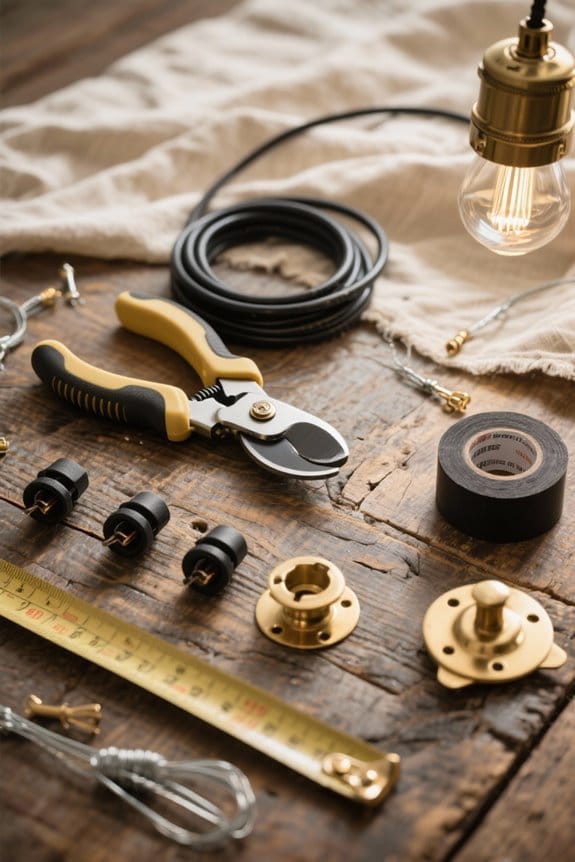
Adjusting pendant light cords requires a careful selection of essential tools and materials to confirm safety and precision during the process. A flathead or Phillips screwdriver is essential for removing the fixture and securing connections, assuring a reliable installation. The measuring tape enables accurate height adjustments, allowing for perfectly aligned pendant placement. A wire cutter/stripper prepares electrical cords by trimming and exposing copper conductors, facilitating proper reconnection. Safety remains paramount, so a voltage tester confirms that power is off, averting electrical hazards. Finally, a sturdy ladder or step stool provides safe access to the fixture, especially in high or hard-to-reach areas, making the adjustment task safer and more efficient. Having these tools assures a successful lighting upgrade experience, showcasing design elegance. Additionally, ensuring proper energy efficiency can greatly enhance the overall performance and sustainability of your lighting choices.
Recommended Products
High-Power Efficiency,The 200W jewelry welder offers a maximum power of 200W and pulse energy of 60J, providing precise and efficient welding for various metals. With a wavelength of 1064nm and an adjustable pulse width from 0 to 20ms, it ensures smooth and beautiful weld joints, making it ideal for jewelry, dental, and precision electronic applications.
New and improved hand pendant has large, easy-to-use controls; Hand crank located on the top of the footboard prevents bending for the caregiver when in the low position; Caster easily moves from standard to low bed position

Design: Sophisticated pendant lights kitchen island fixture featuring dual finish champagne bronze and black accents with removable clear glass panes and premium finishes; thoughtfully-designed hanging light fixture for dining room spaces
How to Adjust Pendant Light Cord Length
Transforming a space through pendant lighting is an exciting endeavor, and properly adjusting the cord length can greatly enhance the visual appeal and functionality of the fixture. To adjust the pendant light cord, begin by turning off the power at the circuit breaker for safety. Remove the canopy with a screwdriver, then loosen the cord grip inside to facilitate height adjustments. Pull the adjustable cord through until the desired length is reached, ideally 12-20 inches below the ceiling for standard 8-foot kitchens. Trim and strip the wires, reconnect them according to color codes, and secure with connectors. Finally, tighten the cord grip, reattach the canopy, restore power, and test the light to confirm that the adjustments are effective. Additionally, ensure that the pendant light is compatible with standard E26 base bulbs to maximize lighting efficiency and flexibility.
Recommended Products

Adjustable by pulling charm side through round ball.

Modern Crystal Chandelier: This 2 - tier luxury crystal chandelier is made of high - quality K9 crystal strips with a metal body in black spray - painting polish finish, and the stylish and luxurious shape is a perfect decoration for a modern home, creating a luxurious retro atmosphere for your home.

【Unique Desgin 】It is not only a lamp, but also a pleasing artwork. When it hangs from the ceiling, it not only illuminates the surrounding environment, but also injects a unique soul creativity into the room. It blends harmoniously with your home decor, creating a warm, comfortable, peaceful and tranquil atmosphere.
Aesthetic Tips for Pendant Light Placement
Proper cord length adjustments not only enhance the functionality of pendant lighting but also set the stage for its aesthetic placement, which plays a pivotal role in elevating the overall grandeur of a space. To guarantee the fixture hangs at the desired length, designers recommend that the bottom of pendant lights be positioned 60 to 66 inches above standing areas and 30 to 36 inches over dining tables. This height adds visual interest while maintaining a spacious feel. Larger pendants, such as those from renowned brands like Moooi, can be installed higher to prevent overwhelming a room, whereas smaller fixtures can hang lower to create focused lighting. This careful consideration of placement ultimately contributes to a harmonious design within any space. Additionally, incorporating elements like a quiet operation diffuser can enhance the ambiance by creating a serene environment.
Can You Lengthen a Pendant Light Cord?
While many homeowners may wonder about the feasibility of lengthening a pendant light cord, it is, in fact, an achievable task with the right approach and tools. Most pendant lights come with adjustable cables that allow individuals to pull additional slack from the fixture. For chain pendants, adding links enables one to lengthen a pendant effectively. However, rod-based designs restrict this flexibility. It’s essential to turn off the circuit breaker before making any adjustments to guarantee safety. Guiding principles recommend hanging lights 30 to 36 inches above dining tables, maintaining both aesthetic appeal and function. With careful adjustments, one can easily raise or lower a fixture, allowing for versatile placement and design cohesion in interior spaces. Additionally, considering the dimensional versatility of narrow accent cabinets can inspire innovative lighting placements that enhance overall decor.
Recommended Products

Large, single tier chandelier harnessing the robust industrial design of the Hinkley Wells family

MODERN DESIGN – This ET2 Lighting pendant delivers a refined, contemporary look that elevates any room in your home with timeless design appeal.

Elegant Design: The 34031-022 Chandelier features intricate champagne silver or antique gold frames, beautifully adorned with hand-strung glass wafers that resemble floating clouds, making it a stunning centerpiece for your living room or entryway.
Common Challenges in Adjusting Cord Length
Adjusting the length of a pendant light cord, despite its apparent simplicity, can present several challenges that homeowners may not anticipate. A primary issue arises when pulling the cord through the canopy; a tightly secured grub screw can impede this adjustment. Additionally, for chain pendants, removing links involves cumbersome steps and may require wire cutters, complicating DIY efforts. Although swag pendants offer greater flexibility, they risk creating uneven heights if adjustments are not meticulously monitored. Moreover, many pendant fixtures are designed for fixed heights, making regular adjustments impractical and potentially impacting warranty conditions. Consequently, recognizing these common challenges can help homeowners better navigate the intricacies of their pendant lighting projects. Many homeowners find that understanding the versatility of decor can inspire creative solutions to their lighting dilemmas.
Creative Ways to Hang a Pendant Light
Hanging a pendant light offers homeowners an exciting opportunity to infuse their space with personal style and character, and creativity plays a crucial role in the process. One can adjust pendant height using pulleys, enhancing functionality in any dining area. Innovative options abound; for instance, swapping a standard cord for decorative rope can evoke a rustic charm. Using shelf brackets provides a unique visual interest while securing the fixture, creating a balanced look against varying ceiling heights. For a sophisticated touch, draping the cord over elegant hooks can elevate the design. Additionally, embellishing the cord with decorative beads introduces a bohemian vibe, transforming the light into a stunning statement piece, seamlessly blending with surrounding decor using simple tools and materials. Furthermore, consider an adjustable height feature as it allows greater control over the light’s position, improving both aesthetics and functionality in your space.
Installation Safety Precautions
When starting the installation of a pendant light fixture, it is vital to prioritize safety precautions to guarantee a smooth and secure process. Always turn off power at the circuit breaker, eliminating the risk of electric shock. A voltage tester should be used to verify that the wires are not live before handling any electrical connections. It is essential to securely connect wires by matching colors—black to black, white to white, and green or bare to ground—while utilizing high-quality wire connectors. Additionally, wrapping all wire connections with electrical tape for added insulation and protection against accidental contact is highly recommended. Finally, verify that the mounting bracket can support the weight of the pendant light fixture to provide safety and prevent accidents post-installation. For those who struggle to wake up in the morning, incorporating a sound machine functionality can enhance your sleep quality and improve your wake-up experience.
Measuring the Ideal Height for Pendant Lights
How can one guarantee that pendant lights not only enhance a room’s aesthetic but also provide ideal functionality? To achieve this, it is essential to measure the height for hanging pendants accurately. For 8-foot ceilings, experts recommend that the bottom of the pendant hangs 12 to 20 inches below the ceiling, while the bottom should be positioned 60 to 66 inches from the floor in standing areas to avoid glare. For kitchen islands, the ideal hanging height is 30 to 36 inches above the countertop, ensuring effective lighting without causing glare. In dining areas, pendants should be 30 to 34 inches above the table to balance decoration and illumination, allowing one to determine the ideal placement for any space. Additionally, understanding the ideal height for lighting can greatly improve both the function and style of the room.
Recommended Products

Premium Clear Glass: Features hand-polished crystal-clear glass panels/bubbles (no smoke tint), offering 95%+ light transparency for brighter, distortion-free illumination with the room decoration to create an elegant and luxurious atmosphere.The drum chandelier for living room,dining room.

【Crystal-Clear Illumination】Features hand-polished, premium clear glass panels (no smoke tint) that provide over 95% light transparency for a brighter, distortion-free glow. Designed to create an elegant and luxurious atmosphere in your living room or dining room.

STILLO COLLECTION – Part of the Stillo Collection, this multi-light pendant pairs a black finish with quality steel construction for a refined, design-forward statement that elevates any room.
Final Considerations for Pendant Light Adjustment
After determining the ideal height for pendant lights, attention shifts to the final adjustments that can make or break the design’s success. Carefully adjusting the length of cord lengths while maintaining a minimum clearance of 30-36 inches over dining tables or kitchen islands is essential for adequate illumination. Eye-level placement is another important consideration; ideally, the bottom of the fixture should be positioned between 60-66 inches from the floor. Homeowners must also consult the manufacturer’s specifications to verify the pendant adheres to maximum and minimum height adjustments, avoiding potential warranty issues. Utilizing tools like measuring tape or temporary string can aid in visualizing ideal placement, thereby enhancing the room’s overall aesthetic harmony and functionality.
Frequently Asked Questions
How Do You Adjust the Length of a Pendant Light?
To adjust pendant light length, one must consider installation tips like wiring safety and bulb types, while ensuring style considerations align with design aesthetics and ceiling height for ideal function and visual appeal.
How Long Should a Pendant Light Cord Be?
A pendant light cord length should align with ceiling height considerations and design trends, typically ranging from 12 to 36 inches below the ceiling. Installation tips include adhering to safety regulations and accommodating various pendant light styles and bulb types.
How to Shorten a Cord on a Pendant Light?
To shorten a pendant light’s cord, one must dare to slice through excess with precision. Adjusting height can enhance design aesthetics, while guaranteeing installation safety and cable management during replacement guarantees a harmonious blend of function and beauty.
How to Lengthen Cord on Pendant Light?
To lengthen a cord on a pendant light, consider DIY adjustments that enhance design styles. Always prioritize cord safety tips to guarantee secure connections, ultimately improving lighting ambiance to align with current home decor trends.