As an Amazon Associate, we earn from qualifying purchases. Some links on this site are affiliate links at no extra cost to you. Our recommendations are based on thorough research and editorial judgment.

How Linen Curtains Provide Light Filtration

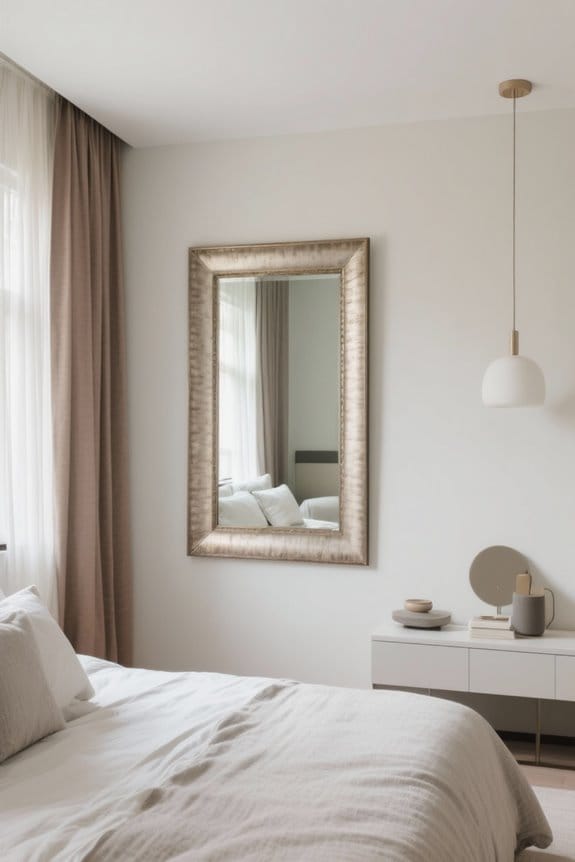
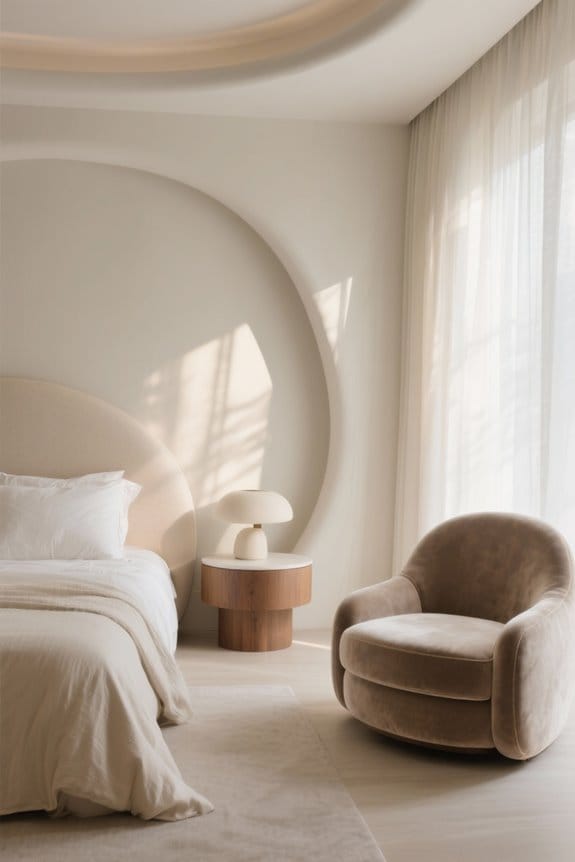
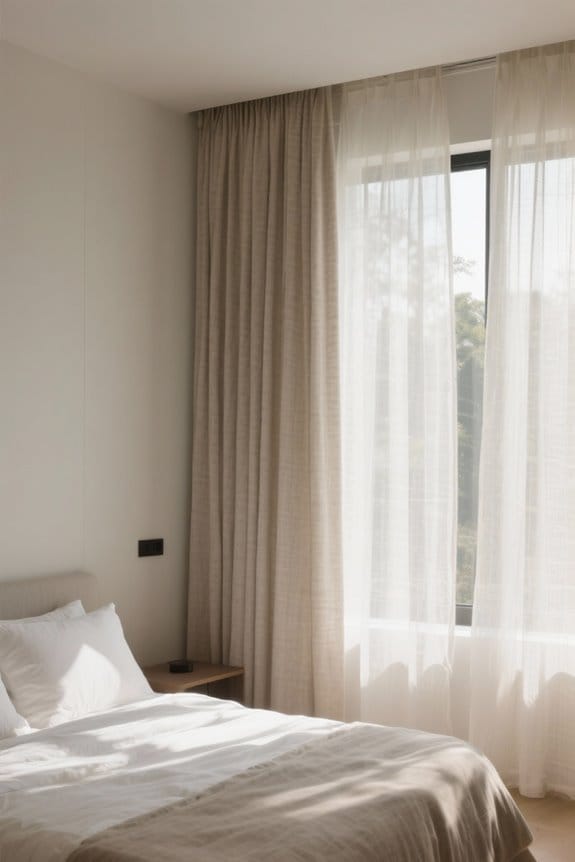
Linen curtains, made from the strong and durable fibers of the flax plant, provide effective light filtration through their unique semi-sheer structure. This allows sunlight to diffuse gently, reducing harsh glare and minimizing shadows while maintaining a sense of privacy and aesthetic appeal. The breathable nature of linen also contributes to comfort in various climates, making it a versatile choice for interior design. Discover the many benefits of linen as you continue to explore its features and applications.
Key Takeaways
- Linen curtains diffuse light effectively due to their unique fiber structure, reducing harsh shadows and glare.
- The semi-sheer quality of linen allows soft light penetration while maintaining a level of privacy.
- Lighter shades of linen permit greater light transmission compared to darker colors, enhancing brightness in a room.
- The porous nature of linen promotes airflow, creating a serene and comfortable atmosphere with natural light.
- Linen’s loose weave balances brightness while filtering light, contributing to visual comfort in living spaces.
Understanding Linen Fabric Composition
When exploring the composition of linen fabric, it is essential to understand its unique origins and structure, which greatly influence its functionality and appeal in design. Derived from the flax plant, linen fibers are long and cellulose-rich, offering remarkable strength and durability, which surpasses that of cotton fiber types. The presence of natural waxes and unique chemical attributes not only contributes to fabric softness but also enhances its protective qualities. Initially slightly rough, linen’s texture softens through repeated washings, making it increasingly comfortable over time. Significantly, the variation in weave density and blend options, such as combining flax with cotton, can further affect softness, allowing designers to create versatile textiles suited for various applications while maintaining that signature linen charm. Additionally, linen is highly breathable, which makes it ideal for reducing heat buildup in spaces adorned with its curtains. Furthermore, its eco-conscious design aligns with sustainable practices, making it an attractive choice for environmentally-aware consumers.
The Mechanism of Light Diffusion
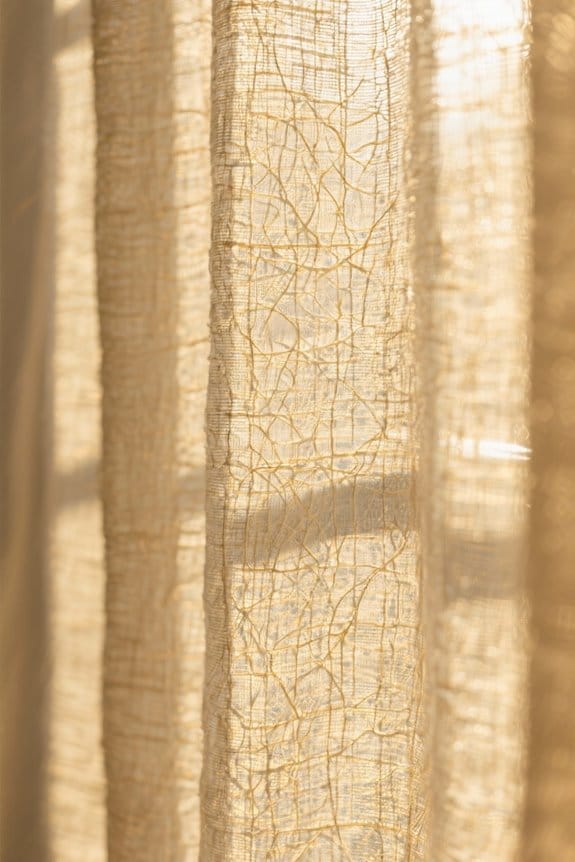
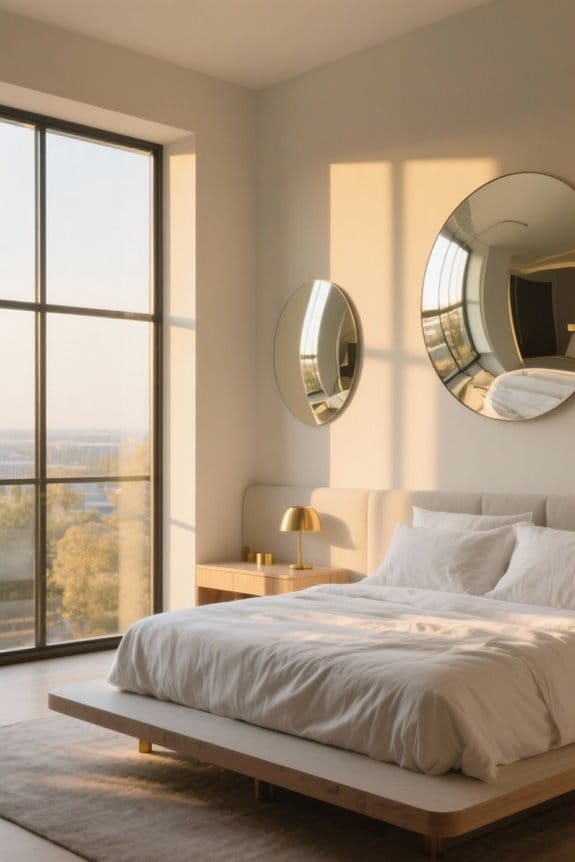
The unique structure of linen fibers plays a significant role in their ability to diffuse light, creating a soft, ambient glow that enhances interior spaces. When sunlight strikes the semi-transparent fabric, light scattering occurs, allowing rays to be deflected and redirected by the irregular fiber structure. This action, combined with the looser weave and semi-sheer quality of linen, guarantees an effective diffusion process. As light penetrates the fabric, it softens, eliminating harsh shadows and reducing glare. Consequently, the result is a balanced illumination that fosters visual comfort, ideal for reading or relaxation. Furthermore, lighter shades permit greater light transmission compared to darker options, offering homeowners flexibility in achieving their desired ambiance while maintaining fabric transparency. Additionally, linen curtains also filter harmful UV rays, protecting furniture and decor from fading while enhancing the overall atmosphere of a space. Moreover, the waterproof ratings of curtains can complement the light-filtering properties, making them suitable for various environments, further enriching the living experience.
Privacy Benefits of Linen Curtains

Linen curtains offer an elegant solution for achieving privacy in contemporary homes while maintaining a refined aesthetic. Their natural weave softly filters light and obscures direct views from outside, making interiors less visible to passers-by. In urban settings, where privacy levels can be challenging to maintain, heavier linen or those with privacy linings greatly enhance protection from prying eyes, particularly in high-traffic areas. This dual-layer approach not only boosts opacity but also retains the fabric’s classic charm. The breathable, sound-absorbing properties further solidify linen’s role in creating serene, private spaces, whether in bedrooms or living rooms. Overall, linen curtains balance beauty and functionality, providing a stylish barrier without compromising on light and comfort. Additionally, this extra layer of insulation helps enhance energy efficiency, contributing to a more comfortable atmosphere. Non-slip area rugs can also enhance safety and comfort in homes by preventing slips in areas adjacent to linen-draped windows.
Recommended Products

✅2 PANELS SET: Sold pair in package. Panel measures: 100 W x 288 L inches, set measures: 200 W x 288 L inches. Each window drape constructed 14 nickle grommets with 1.6 inch inner diameter, fit well with standard or decorative curtain rods. Easy to install and slide. Matching tiebacks included.

Fabric Weight: 350GSM Faux Linen. Natural skin-friendly, premium and heavyweight Faux Linen finish. Each curtain has a white, Light filtering 140gsm lining. (Dark color shades can reach 80%, light color shades can reach 70% with liner).

Fabric: 350GSM linen blend fabric with 150GSM blackout lining. 3.5 inches wide embroidered tape trim. Elegant and classic style which fits any types of decoration.
Moderating Light and Glare
Achieving a balance between light and glare is a pivotal aspect of interior design, especially in spaces that rely on natural illumination to create warmth and vibrancy. Linen curtains, with their semi-translucent weave, excel at light modulation by softly diffusing sunlight, which not only illuminates a room but also considerably reduces glare. This reduction is particularly beneficial in environments where screens are prevalent, as the thicker weaves effectively minimize reflections that can cause eye strain. Additionally, the porous structure of linen allows air and light to flow gently, fostering a calm atmosphere. By incorporating linen curtains, designers, such as those from the brand Lino, can create inviting spaces that prioritize comfort while balancing brightness, demonstrating both practical and aesthetic appeal. Moreover, light filtering curtains not only enhance privacy but also augment this sense of comfort and style in any room. The combination of customizable steam controls in iron designs reflects a similar emphasis on versatility and functionality in home decor choices.
Recommended Products

High Quality Sheer Curtains:The sheer curtains are composed of 100% polyester fabric that gives it airy and wrinkle free properties along with sheerness that helps the curtain gather neatly and fall straight.

【Modern Zebra Blinds for Indoor Windows】 Add a sleek, modern look with zebra roller shades that combine style and function. These light filtering blinds for indoor windows feature alternating sheer & opaque fabric bands, giving full control over brightness and privacy. Perfect window blinds for home, bedrooms, living rooms, kitchens, and offices—ideal for anyone seeking versatile day and night shades.

Composition : 100% Pure European Flax Linen Curtain - Made of handwoven light and airy linen, our beautifully textured curtain provides privacy while filtering incoming natural light. Perfectly suited for spring, summer, fall and winter | OEKO-TEX STANDARD 100 Certified : Tested for harmful substances to ensure textile safety.
Energy Efficiency and Insulation Properties
Energy efficiency in home design often hinges on the choice of window treatments, with linen curtains emerging as a thoughtful option for many designers. These curtains offer moderate insulation effectiveness due to their natural breathability, which facilitates airflow and prevents the “sealed box” effect found in synthetic fabrics. The tightly woven structure of linen can considerably reduce solar radiation entering a room, contributing to energy savings by lowering peak temperatures during warmer months. Additionally, linen’s moisture absorption aids in regulating indoor humidity, creating a more comfortable environment. While not as insulating as thermal drapes, linen curtains can improve energy efficiency, particularly when paired with a thermal lining, ultimately leading to measurable reductions in heating and cooling costs, making them a wise investment in sustainable design. Breathable quality of linen also allows for air circulation, further enhancing comfort throughout the day.
Recommended Products

FLAT HOOKS TOP CURTAIN: Sold per pair (2 panels). Each panel measures: 100 W x 288 L inches. Come with adjustable plastic pin hooks. 10 hooks for 52" width; 21 hooks for 100"W. Easy to install and slide.

Fabric Weight: 350GSM Faux Linen. Natural skin-friendly, premium and heavyweight Faux Linen finish. Each curtain has a white, Light filtering 140gsm lining. (Dark color shades can reach 80%, light color shades can reach 70% with liner).

PLEASE ORDER SWATCHES BEFORE ORDERING THE CURTAINS BECAUSE THIS ITEM WILL BE CUSTOM-MADE WHEN ORDERED AND WE APPLY A 25% RESTOCKING FEE UNLESS THERE ARE ERRORS ON OUR PART. The digital images we display have the most accurate color possible. However, due to differences in computer monitors, there can be different shades of color between the actual product and your screen, this is why we recommend seeing the swatches first.
Enhancing Interior Aesthetics
When aiming to elevate the aesthetic appeal of interiors, the choice of window treatments plays a pivotal role, and incorporating linen curtains is a design choice that offers both beauty and functionality. Renowned for their color variety, these curtains harmonize with a wide spectrum of decor styles, from modern minimalism to rustic charm. Their design versatility allows for layering with other textiles, creating intriguing visual complexity while enhancing warmth within the space. The organic texture of linen, paired with its distinctive weave, adds depth to any room, making it feel inviting and stylish. Additionally, the soft diffusion of natural light through the fabric contributes to a serene ambiance, enriching overall interior aesthetics and promoting a sense of tranquility in everyday living. Furthermore, opting for a biodegradable fabric highlights a conscious effort towards environmental sustainability in home design. Many people are embracing energy-efficient options, ensuring their choices align with both style and eco-friendliness.
Protection Against UV Rays
The protective qualities of linen curtains extend beyond their aesthetic appeal, making them a smart choice for homeowners seeking to guard against harmful UV rays. Linen boasts inherent ultraviolet resistance due to its dense, natural fiber structure, effectively blocking a moderate amount of UV radiation. Thicker and heavier weaves enhance this UV absorption, ensuring better protection for interior furnishings from sun damage. While sheer linen curtains diffuse sunlight and reduce glare, they still permit some UV rays to pass through, offering limited protection. Pairing these sustainable linens with additional window treatments or lining can notably increase UV resistance. Such strategies not only prolong the life of linens but also render spaces healthier and more vibrant, showcasing practical design that marries sustainable living with style. Incorporating features such as LED nightstands can also contribute to a more efficient and aesthetic bedroom design, enhancing the overall ambiance.
Recommended Products

✔️ONE PANEL: Sold per panel. Panel measures: 150 W x 96 L inches, each window curtain has 26 or 27 pleats. Come with matching tiebacks and adjustable pin hooks. Please noted that round metal rings are not included.

✅2 PANELS SET: Sold pair in package. Panel measures: 100 W x 168 L inches, set measures: 200 W x 168 L inches. Each window drape constructed 14 nickle grommets with 1.6 inch inner diameter, fit well with standard or decorative curtain rods. Easy to install and slide. Matching tiebacks included.
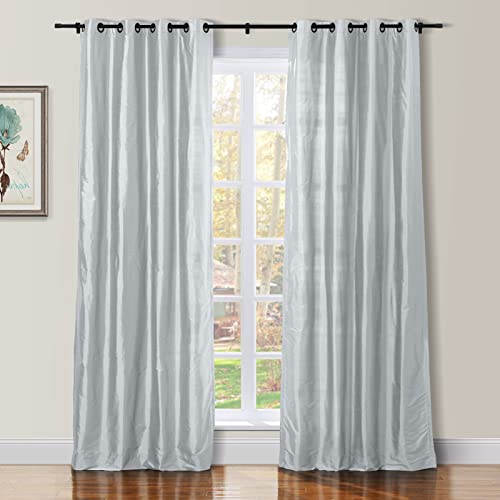
READY MADE: Grommet inside diameter 1.6 inches, outside diameter 2.36 inches. 14 grommets for 100" wide. Fit for 1.5" rod.
Maintaining Comfort in Different Climates
Linen curtains not only provide protection against UV rays but also excel in maintaining comfort across varying climates. Their climate adaptability makes them ideal for both hot and cold environments, as they effectively filter sunlight while allowing for airflow, which helps prevent indoor overheating. In humid conditions, linen’s moisture-absorbing properties enhance seasonal comfort, reducing stickiness and promoting a temperate atmosphere. Additionally, linen’s unique thermal regulation capabilities facilitate warmth retention during winter months, creating a cozy indoor space without straining heating systems. As noted by renowned designer Sarah Richardson, “Linen enhances the home’s natural feel, supporting energy efficiency and comfort.” Thus, with the right layering, such as combining linen with thermal linings, these curtains offer year-round ease and functionality. High-quality workmanship in linen curtains ensures they remain durable and uphold their aesthetic appeal, enhancing the overall experience in any climate. Furthermore, incorporating energy-efficient lighting solutions like metal floor lamps can complement the soothing ambiance created by linen curtains.
Care and Maintenance of Linen Curtains
Proper care and maintenance of linen curtains secures their beauty and longevity, enhancing the aesthetic appeal of any space. To preserve fabric integrity, gentle cleaning techniques are essential; hand washing is recommended for delicate linens, while a delicate machine cycle with cold water can also suffice. It is important to avoid bleach and harsh detergents, which can compromise the natural fiber’s strength and color. For storage solutions, curtains should be kept in a dry, cool place, avoiding plastic bags in favor of breathable cotton covers. Regular dusting, along with prompt stain treatment using mild soap and lukewarm water, will help maintain their elegance. Additionally, consider implementing cooling effects similar to those found in specialty pillows to enhance comfort and overall ambiance. Ultimately, these practices guarantee that linen curtains continue to filter light beautifully for years to come, while their natural breathability also contributes to a comfortable living environment.
Recommended Products

Includes: one (1) storage ottoman

10 Gauge = 0.010 inches thick. Our clear vinyl is 72 inches wide. Perfect for formal table cloths (extra wide). Each roll comes with paper interleaf to prevent scratching and sticking. Our vinyl is double polished to create a very smooth and crystal-clear transparent vinyl material that is great for both indoor and outdoor use.

Functional sliding panels: 60% blackout linen textured fabric, filter light and reduce heat, also create air circulation. Removable & replaceable panels, easy to clean. Valance is optional, cordless style is safe for kids and pets. Ideal for sliding glass door or room divider.
Durability Compared to Other Fabrics
When comparing the durability of linen curtains to other fabric options, one may discover that each material offers unique advantages and drawbacks, particularly regarding longevity and resilience. Linen’s durability outshines cotton in sun-exposed environments, as its strong fibers resist color fading and structural damage, lasting 10-15 years with proper care. In fabric comparisons, polyester offers superior resistance to wrinkling and fading, making it ideal for high-traffic areas; however, it lacks the aesthetic appeal that develops in linen over time. Additionally, quality fitted sheets significantly contribute to overall sleep quality, highlighting the importance of choosing fabrics wisely. While linen requires more delicate handling due to its natural tendencies, its performance under repeated laundering cycles remains commendable. Linen is highly durable; ultimately, linen curtains exemplify a balance of strength and timeless beauty, perfect for anyone seeking long-lasting elegance in their home.
Sustainable Choices in Linen Fabrics
Choosing sustainable linen fabrics involves understanding not just the material itself, but also the agricultural practices that support its cultivation and processing. Linen made from organically grown flax, for example, thrives with minimal water and without synthetic fertilizers or pesticides, aligning well with principles of sustainable production. This not only promotes biodiversity but also supports soil health through effective crop rotation methods. Moreover, eco-friendly dyeing techniques, such as Cold Pad Batch and natural plant-based dyes, minimize chemical runoff and reduce environmental pollution. Brands committed to sustainability often achieve certifications from bodies like GOTS or OEKO-TEX, ensuring that the entire lifecycle of the linen—from farm to finished product—adheres to ethical and ecological standards, additionally appealing to environmentally conscious consumers. Additionally, organic flax cultivation often utilizes advanced agricultural techniques, contributing to the overall sustainability and quality of the fabric. Linen biodegrades naturally throughout its life cycle, contributing to its low environmental impact.
Frequently Asked Questions
Can Linen Curtains Block Out Noise Effectively?
Linen curtains can effectively block out noise, offering noise reduction of 10-15 decibels. Their sound insulation properties improve with layering, density, and proper installation, making them a practical choice for reducing ambient sound levels.
How Do Linen Curtains Compare With Blackout Curtains for Darkness?
Linen curtains typically allow 30-40% light transmission due to their lower fabric density, whereas blackout curtains block 90-100% of light. This stark difference highlights linen’s inability to create complete darkness compared to blackout options.
Are Linen Curtains Suitable for Humid Climates?
Linen curtains are suitable for humid climates due to their humidity resistance, effectively managing moisture and preventing mold. Their natural properties contribute positively to indoor environments, enhancing air quality with minimal environmental impact despite regular maintenance requirements.
Do Linen Curtains Come in Different Colors and Patterns?
Linen curtains indeed come in an array of color variations and pattern choices. These options range from calming neutrals to vibrant hues and intricate patterns, providing opportunities to personalize living spaces while maintaining aesthetic appeal and functionality.
How Do I Prevent Linen From Fading in Direct Sunlight?
To prevent linen from fading in direct sunlight, one should consider UV protection techniques like blackout linings and fabric treatments. Layering curtains or using window films further enhances sun protection and fabric longevity.