As an Amazon Associate, we earn from qualifying purchases. Some links on this site are affiliate links at no extra cost to you. Our recommendations are based on thorough research and editorial judgment.

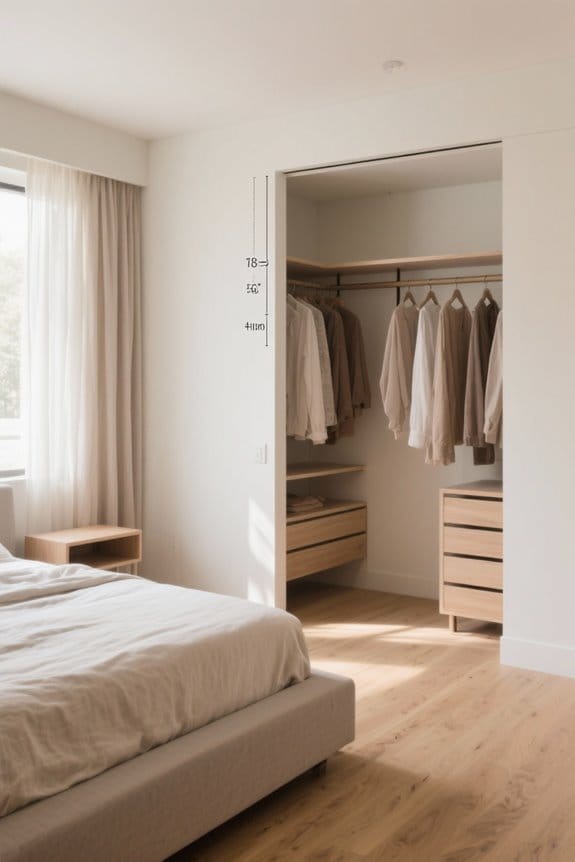
Understanding Closet Rod Height Standards

Understanding closet rod height standards is essential for efficient storage. Typically, a single rod is set at 66 inches, while double rod systems require the upper rod at 80 inches and the lower at 40 inches, optimizing space for different garments. Factors like user height and garment type influence these measurements, as a thoughtful design approach can enhance accessibility. A proper setup includes 1-2 inches above the rod for ease. For further insights into maximizing closet design, consider exploring additional details on this topic.
Key Takeaways
- Standard single rod height is 66 inches, providing ample space for hanging clothes.
- Double rod systems should have the upper rod at 80-82 inches and lower rod at 40 inches.
- Children’s closets recommend rod heights between 30-40 inches for easy access.
- Ensure 1-2 inches of clearance above each rod for optimal organization and accessibility.
- Adjustable rod heights can enhance closet efficiency and accommodate various clothing types.
Standard Closet Rod Heights
In the world of interior design, the organization of space plays a crucial role, particularly when it comes to closet functionality. Standard height for a single closet rod is set around 66 inches, which accommodates most garments effectively. In contrast, a double rod setup features an upper rod positioned between 80 and 82 inches high for longer items, while the lower rod finds itself around 40 inches, perfect for shorter garments like skirts. For children’s closets, recommended rod heights are considerably lower, typically between 30 to 40 inches, ensuring easy access for young users. Maintaining a 1 to 2-inch gap above each rod facilitates excellent accessibility, preventing fabric touching the shelves and allowing seamless retrieval of clothing items, promoting efficient organization within limited spaces. Additionally, adjustable rod heights can provide tailored solutions for various garment lengths, enhancing closet efficiency.
Recommended Products

1.Pull-out design makes it easier to take.The staggered stacking design increases the storage capacity by 1.8 times
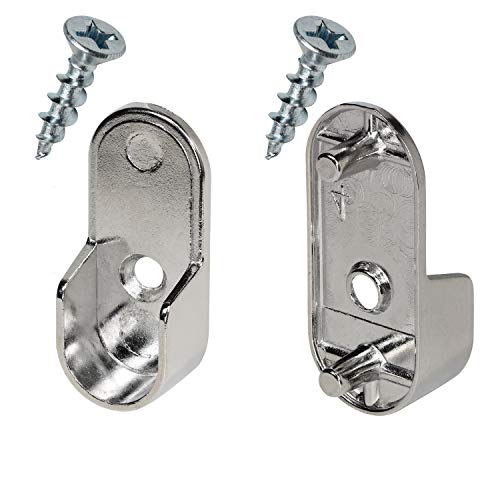
PRACTICAL: This closet organizer hardware is a cost-effective way to utilize and expand valuable closet space. Designed for use with wood or metal closet rods up to 19/32" (15mm) diameter.

【Sturdy Metal】:The closet rod is made of durable aluminum with a diameter of 1 inch. The auxiliary support design in the middle of the rod allows it to accommodate thick clothes without any problems
Factors Influencing Rod Height

How do various factors converge to influence the ideal height of a closet rod? The type of garments stored plays a significant role; long garments necessitate higher rod placements, often around 66 inches, to avoid floor dragging. User height is another consideration; adults typically require rods at this height, while children’s needs range between 30 to 40 inches. Additionally, closet configuration impacts positioning, especially in double rod systems, where the upper rod may be set at 80 inches and the lower at 40 inches. Furthermore, maintaining 1 to 2 inches of clearance above rods is essential for organizing and preventing fabric entanglement. Ultimately, these factors work together to create proper height for maximizing vertical space in the closet. Incorporating adjustable loft options also assists in tailoring closet rod height to individual storage needs.
Single vs. Double Rod Systems

Choosing between a single rod and a double rod system can markedly impact the functionality and organization of a closet. Single rod systems, typically mounted at an ideal closet rod height of 66 inches, offer ample hanging space for various clothing types. However, double rod systems maximize vertical space by positioning an upper rod for long garments at approximately 80 to 82 inches, while a lower rod set at around 40 inches facilitates easy access to shorter items. This thoughtful separation improves closet efficiency, as it allows for better organization by clothing length. Ultimately, selecting between these systems hinges on individual storage needs, available space, and the specific clothing types, ensuring that each closet is tailored to its owner’s lifestyle. Additionally, considering energy-efficient designs when selecting lighting for the closet can enhance its functionality.
Recommended Products

CLOSET KIT WITH HANGING RODS, SHELVES & DRAWERS - the perfect amount of hanging rods, shelves & drawers to organize your closets with ease and style! Fully assembled kit is 52.5" wide. Comes with chrome drawer knobs & all the necessary installation hardware.

3 PIECE MODULAR CLOSET ORGANIZER KIT - Includes two double-hanging modules (25.5" wide) and one shelf tower (31.5" wide) with adjustable shelves for a clean mix of hanging space and shelves.

【4 in 1 Flexible Closet Organizer System】This 4 pcs modular closet organizer system (each measures 23.7"W x 15.8"D x 81"H) can serve as a standalone closet organizer or be flexibly combined with other units. It’s ideal for creating a personalized closet solution to fit your room size or storage needs, Whether in the sleeping area, walk-in closet, entryway, laundry room, or other living spaces”.
Height Recommendations for Different Closet Types
When contemplating the ideal heights for closet rods, it is essential to take into account the specific function and purpose of each closet type. For standard closets, the recommended height for a single rod is typically around 66 inches, which accommodates most dress lengths. In double closet rod systems, the heights are adjusted with the upper rod set at 80 inches and the lower rod at 40 inches, allowing for organized storage of both short and long garments. Children’s closets should feature rods installed between 30 to 40 inches, ensuring accessibility. Walk-in closets generally benefit from rod heights between 66 to 72 inches, maximizing closet space, while coat closets typically align with the standard at 66 inches, ideal for long coats and jackets. Including over-door closet organizers can further enhance storage capabilities, especially in smaller spaces.
Recommended Products

VERSITLE - Automatically compensates for any thickness wall cleat (or no cleat at all)
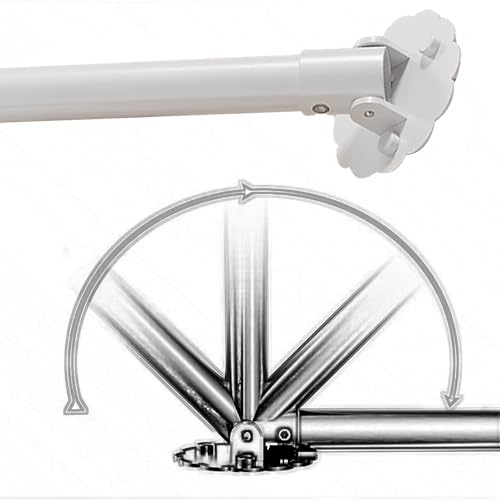
【Metal Wardrobe Rods】:The closet rod is made of durable stainless steel. The retractable design allows you to not have to worry about whether or not it will be ready for use when it arrives, and can be easily adapted to a variety of closet scenarios

【Metal Wardrobe Rods】:The closet rod is made of durable stainless steel. The retractable design allows you to not have to worry about whether or not it will be ready for use when it arrives, and can be easily adapted to a variety of closet scenarios
Installation Tips for Closet Rods
Establishing the correct installation of closet rods not only guarantees functionality but also enhances the overall organization within a closet space. To install a closet effectively, utilizing a stud finder guarantees secure bracket installation, allowing the rods to support more weight without sagging. For standard setups, the top rod should be placed at approximately 66 inches, while the bottom of the rod in a dual configuration is ideally set at 40 inches. Additionally, maintaining 1 to 2 inches of clearance from the top rod to any overhead shelves is vital for easy access. Moreover, proper rod placement should be at least 12 inches from the back wall to create ample hanging space, allowing garments to breathe without overcrowding. Choosing a heavy-duty option ensures that the closet rod can support substantial weights, making it essential for extensive wardrobes.
Recommended Products
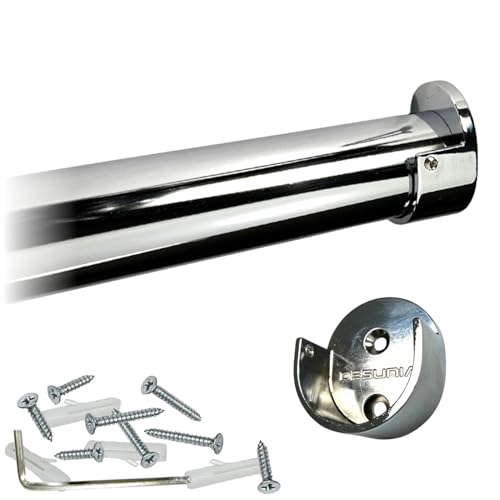
✅HEAVY DUTY - Between the 32mm diameter and the thick .050 side walls, this rod can handle just about anything you can throw at it

Smart Lifting System: The Touch Switch, Remote Control, and Voice Control functions operate the electric lifting pull-down closet rod, enabling it to move up and down at any angle. You can install your clothes rack at a higher position in your wardrobe and pull it down when needed. Additionally, the closet rod automatically stops when it encounters an obstacle. Please note that the Remote Control and Voice Control functions require customization

Smart Lifting System: The Touch Switch, Push Botton and Voice Control functions operate the electric lifting closet rod, enabling it to move up and down at any angle. You can install your clothes rack at a higher position in your wardrobe and pull it down when needed. Additionally, the closet rod automatically stops when it encounters an obstacle. Please note that the Voice Control functions require customization
Adjustments for User Accessibility
How can the placement of closet rods transform accessibility for every family member? By adjusting rod heights based on the specific needs of primary users, families can enhance convenience and usability. For children, rod heights should typically range from 30 to 40 inches, allowing easy access to their long garments. In contrast, the Americans with Disabilities Act recommends heights between 48 to 52 inches for individuals with disabilities, promoting equity in accessibility. For average reach-in closets, ideal rod height is around 60 to 66 inches, seamlessly balancing accessibility with maximum vertical space. Custom closets present unique opportunities, allowing homeowners to incorporate adjustable systems that can be fine-tuned to accommodate evolving preferences and needs, further improving overall functionality and user satisfaction. Additionally, ample storage options in custom designs can enhance organization and improve user experience.
Recommended Products

Set Includes: One 42 in. Multi-Use Locker, 1 Project Center, 3 Multi-Use Lockers, 6 Wall Cabinets, 1 Rolling Tool Cabinet, Two 2-Door Base Cabinets, One 62 in. Bamboo Worktop and One 72 in. Bamboo Worktop

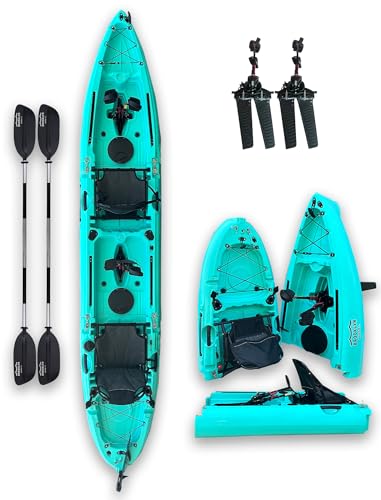
MODULAR 2 to 3 PIECE DESIGN: Breaks down into three lightweight sections for easy transport, storage, and solo setup, use all pieces for tandem trips or connect front + rear for a compact single-rider kayak.
Frequently Asked Questions
What Height Should Your Closet Rod Be?
In a well-designed closet layout, a closet rod should ideally measure around 66 inches for maximum efficiency. However, adjustable heights can accommodate diverse garment types and accessibility needs, catering to user preferences and organizing techniques.
What Is the Height of a 2 Level Closet Rod?
The height of a two-level closet rod typically ranges from 80 to 82 inches for the upper rod and 40 to 42 inches for the lower rod, optimizing closet organization techniques and maximizing storage space effectively.