As an Amazon Associate, we earn from qualifying purchases. Some links on this site are affiliate links at no extra cost to you. Our recommendations are based on thorough research and editorial judgment.

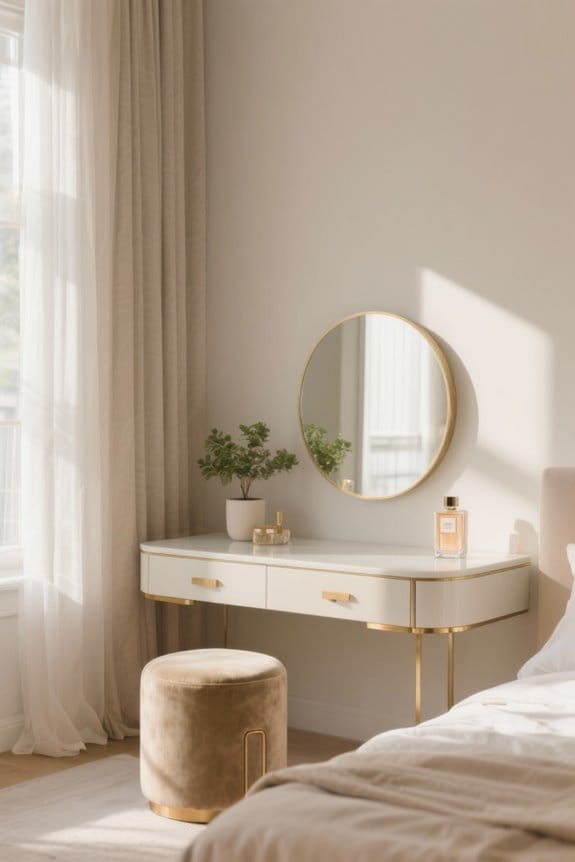
The History of Vanity Tables in Bedroom Culture

The history of vanity tables in bedroom culture showcases their evolution from elaborate 18th-century toilet tables to multifunctional contemporary designs. Initially, these pieces embodied elegance, featuring intricate carvings and family emblems, like the Pondreuse and Lowboy. By the 19th century, dressing tables became essential to personal grooming, influencing styles with materials like oak and mahogany. Today, designers such as Michael Graves create minimalist yet sophisticated versions, reflecting a blend of artistry and practical storage, highlighting their ongoing significance in modern interiors. There’s much more to explore regarding their cultural impact and design evolution.
Key Takeaways
- Vanity tables originated as toilet tables in the 18th century, emphasizing personal grooming and elegance in high society bedrooms.
- The Pondreuse and Lowboy established early designs that catered to women’s beauty needs, influencing the refinement of modern vanity tables.
- By the 19th century, dressing tables became integral to bedroom culture, reflecting Victorian ideals of sophistication with intricate designs and multiple mirrors.
- 20th-century vanities evolved from earlier tables into elaborate pieces, combining craftsmanship with function and becoming essential decor reflecting social status.
- Contemporary vanity tables balance aesthetics and practicality, incorporating modern materials while retaining their historical significance as symbols of luxury in personal spaces.
The 18th Century Toilet Table
In the domain of 18th-century interior design, the toilet table served as a remarkably functional yet stylish centerpiece in the bedrooms of high society. These elegant pieces, originally designed for hygiene and grooming, featured a wash basin beneath a fold-down top, allowing for both convenience and aesthetics. As fashion evolved, toilet tables transformed, becoming smaller and adorned with intricate carvings, reflecting the artistic preferences of the time. High society individuals personalized these tables with family emblems or coats of arms, symbolizing their status and wealth. The emphasis on personal grooming became increasingly important during this era, leading to the toilet table’s rise as an essential element in the pursuit of beauty and elegance, mirroring the broader cultural shifts of the 18th century. Additionally, the changing designs of furniture items like accent console tables in modern homes show how individual style continues to be expressed in personal spaces.
The Pondreuse and Lowboy

As the 17th century unfolded in France, the pondreuse emerged as a sophisticated dressing table that catered specifically to the needs of fashionable women, exemplifying the period’s burgeoning interest in personal grooming. This elegant piece of furniture design was adorned with compartments for cosmetics, perfumes, and beauty items, making it invaluable for the aristocracy. Similarly, the lowboy, an 18th-century English counterpart, featured short legs and offered one to two rows of drawers for storing beauty items. Often custom-made, lowboys boasted intricate carvings and unique handles, reflecting the owner’s social standing. Both the pondreuse and lowboy laid the groundwork for modern vanity tables, showcasing the evolving relationship between functional furniture and personal grooming in everyday life, emphasizing refinement and style. The importance of organized storage solutions was evident in these early designs, mirroring the practical needs of users even then.
Recommended Products

Vanity Dimensions: Width 36 inches x Depth 18 inches x Height 30 inches

【Eye-Catching Farmhouse Impress】Overall Measuring: 45''W * 15.8''D*75.2''H. Its antiqued two-tone aesthetic blends weathered white with a distressed wood-finished top & barn-door decor design for added farmhouse charm and elegance.

[Farmhouse Style] This vanity desk stands out because of its rich farmhouse style. With a perfect blend of distressed white finishes, z-brace barn door trim, and exposed metal hardware, the makeup vanity desk is not only robust and sturdy, but it also has farmhouse charm and adds a relaxed, earthy aesthetic to the room. The unique sliding door design on the upper part can be used to hide the shelves/lighted mirror, both exquisite and practical
The 19th Century Dressing Table

The 19th-century dressing table emerged as a focal point in the evolving narrative of bedroom culture, symbolizing both personal care and aesthetic refinement. Often crafted from oak, walnut, or mahogany, these Victorian-era dressing tables featured intricate detailing and elaborate finishes that highlighted exceptional craftsmanship. Designers drew inspiration from styles such as Colonial, Queen Anne, and Chippendale, ensuring the tables harmonized with matching bedroom furniture sets. As personal grooming routines became increasingly sophisticated, these larger designs included multiple drawers and mirrors. The late 19th century also saw the rise of the Arts and Crafts movement, which emphasized simpler designs and clean lines. Ultimately, the dressing table became synonymous with domestic elegance, further popularized through its depiction in literature and art. Rustic bedroom benches play a significant role in enhancing cozy sanctuaries, providing both style and functional storage.
Recommended Products

Eco-Friendly and Durable Material : This vanity stool is crafted of high-quality oak wood and processed with exquisite craftsmanship, which is sturdy for long-time use.

MODERN DINING TABLE: This stunning round Kitchen table made of wood adds a warm and welcoming touch to both kitchens and traditional living spaces. Its mid-century design exudes elegance and charm, making it a delightful addition to any home. With its frame, the table adds to the overall aesthetic appeal of the room. Gather around this exquisite piece of furniture with your loved ones and create cherished memories.

Eco-Friendly and Durable Material : This vanity stool is crafted of high-quality oak wood and processed with exquisite craftsmanship, which is sturdy for long-time use.
20th Century Vanities
Emerging from the sophisticated designs of the 19th century dressing table, the vanity table of the 18th century marked an intriguing evolution in personal aesthetics and functionality. These dressing tables, initially termed toilet tables, transformed into ornate designs reflecting high society‘s focus on fashion and social standing. Popular styles included the lowboy, recognized for its short legs and decorative features, while French inventions like the poudreuse introduced specialized compartments for cosmetics and perfumes. Elaborate carvings and family emblems graced these pieces, signifying owners’ social standing. By the century’s end, vanity tables emerged as essential components of bedroom decor, not only enhancing the personal grooming experience but also influencing the design ethos for generations to come. The craftsmanship of these early tables parallels the durable materials used in modern furniture design, showing a consistent emphasis on quality throughout history.
Recommended Products

Traditional French Accent Dressing Table

Timeless Design, Natural Beauty Office Desk: Crafted with solid wood veneer, this desk showcases the stunning natural grain of wood, bringing a touch of the outdoors into your home. The dark cherry finish adds warmth and sophistication, making it a perfect fit for your living room, study, or bedroom. The intricately carved legs elevate its charm, blending functionality with timeless elegance.

Size&Material: Measured in 28 inch in diameter, with metal frame,Baroque Style resin and beaded,simple and beautiful.
Origins and Historical Context of the Dressing Table
A fascinating intersection of functionality and aesthetic appeal, the dressing table has its roots deeply embedded in the cultural practices of various civilizations throughout history. Emerging as “toilet tables” in the late 18th century, these pieces of bedroom furniture combined washing basins with storage for makeup, reflecting societal changes in grooming habits. In ancient times, the Egyptians emphasized beauty rituals, utilizing specific jars for makeup, with some buried alongside the deceased, signifying cultural importance. By the late 1600s, dressing tables became status symbols among aristocrats, often featuring personalized designs and family coats of arms. This evolution further embraced unique features such as folding tops and intricate storage designs, greatly influenced by French styles like the poudreuse and English lowboys, shaping modern dressing aesthetics. Today’s vanity tables often incorporate lighting options to enhance the practicality of makeup application.
Evolution and Design Characteristics
Vanity tables, often viewed as the epitome of elegance, have undergone significant transformations in both design and function over the centuries. Originating from the late 17th century with the “toilet table,” these dressing tables featured integrated washing basins and spaces to store cosmetics. French styles, such as the poudreuse, introduced elaborate drawers and ornate details, while the simpler English lowboys prioritized practicality. The 19th century saw larger designs that harmonized with matching bedroom furniture, influenced by Gothic and Rococo revivals. The Art Deco period redefined vanity tables as symbols of modern glamour, exemplified by Hollywood’s portrayals of luxurious interiors. Contemporary designs now range from minimalist to ornate, emphasizing built-in mirrors and organized compartments that balance aesthetic appeal with functionality. Many modern glass vanity tables incorporate features like adjustable LED lighting, enhancing makeup application experiences.
Significant Influences and Cultural Representation
Significant cultural shifts and influential figures have played an essential role in the evolution of vanity tables, transforming them into symbols of status and elegance within bedroom culture. In the 17th century, Madame de Pompadour’s commissioning of exquisite dressing tables from Jean-François Oeben emphasized luxury and personal style. At royal courts, public dressing rituals highlighted the vanity’s role as a stage for showcasing social status and fine craftsmanship. The 19th century saw dressing tables undergoing stylistic transformations, incorporating Gothic and Renaissance elements, while the Art Deco movement established these furniture pieces as distinctly feminine representations of modernity and sophistication. By the 1920s and 30s, Hollywood films showcased dressing tables as cultural icons, representing glamour and luxury that women used to enhance their beauty and lifestyle. Today, many contemporary vanity desks are equipped with built-in charging stations, facilitating multitasking for beauty enthusiasts.
Contemporary Developments and Aesthetic Appeal
Elegance in contemporary design positions dressing tables as both functional furnishings and artistic statements within bedroom spaces. Modern designs showcase a blend of minimalist aesthetics and traditional elegance, effectively creating luxurious focal points that elevate interior design. Iconic examples, such as Raymond Loewy’s molded-plastic valet dressing cabinet and Michael Graves’ Plaza dressing table, demonstrate the versatility of materials and craftsmanship. Today’s dressing tables often feature organized storage with ample drawers for beauty products, ensuring a practical yet stylish grooming area. This resurgence emphasizes not only the necessity of functionality but also the importance of visual appeal, merging practicality with artistry. Ultimately, dressing tables continue to symbolize sophisticated living, enhancing both the atmosphere and utility of personal spaces. Additionally, many modern vanity desks include adjustable lighting options to create an ideal environment for makeup application and grooming routines.
Recommended Products

[Happy Bedroom Makeup Time]: Place this vanity desk in the bedroom to brighten up makeup time! Prep you up for the whole day by keeping cosmetic essentials close to hand, every organised and refreshed morning won't be disrupted

【Fluted Vanity, Modern Style】 Featuring a textured wave front and oak finish, this fluted vanity combines modern design with timeless elegance. A perfect statement makeup table that elevates any bedroom or dorm décor.

【36 Inch Large Size Mirror & Adjustable light】T4TREAM vanity desk with mirror and lights offers a super large 36“ size mirror, which can ensure a true and accurate reflection, eliminating distortions that could potentially affect makeup precision. High-quality LEDs around the mirror can be switched to natural, warm, and cool light. Long-pressing the button allows you to adjust the brightness of the lights
Frequently Asked Questions
What Is the History of the Vanity Table?
Like a butterfly emerging from its chrysalis, the vanity table evolved through centuries, reflecting feminine aesthetics and historical significance. Its design trends symbolize cultural identity, while modern adaptations continue to serve practical purposes in daily life.
What Is the Purpose of a Vanity Table?
A vanity table serves to facilitate makeup organization and beauty rituals within a personal space. With modern adaptations in decorative furniture, it promotes female empowerment by providing an aesthetic yet functional area for self-care and expression.
Where Did Vanities Originate?
The origins of vanities trace back to historical furniture trends, intertwining personal grooming evolution with cultural significance. Ancient makeup practices laid the foundation, reflecting gender and aesthetics in both functionality and artistry throughout time.
What Is the Meaning of Vanity Furniture?
Vanity furniture represents a blend of functional design and aesthetic trends, enhancing personal spaces. It facilitates beauty rituals and dressing experiences through various vanity styles, reflecting individual preferences and societal norms in contemporary decor.